
Management Assistance Program
Learning, Leadership and the Future of Practice: What to Expect at the OBA Midyear Conference
By Julie Bays
The OBA Midyear Conference is set to take place at the OKANA Resort in Oklahoma City, welcoming attorneys from all corners of the state for three days. The conference will be filled with engaging educational sessions, meaningful discussions and opportunities to strengthen professional relationships. Attendees will have the chance to connect with colleagues, share experiences and build networks that can support their legal practice well beyond the conference.
Although networking is a hallmark of any legal conference, the core focus of the Midyear Conference lies in its robust educational offerings. This year’s program is thoughtfully designed to address the swiftly changing landscape of the legal profession, providing attendees with the latest insights on pressing topics such as artificial intelligence, cybersecurity, enhancing client experience, ongoing professional development and improving access to justice. Through a variety of sessions, participants will gain practical knowledge and tools to help navigate new challenges and opportunities in their daily practice, ensuring they remain at the forefront of innovation and ethical responsibility.
The conference, scheduled for June 17-19, represents an evolution from the longtime Solo & Small Firm Conference. While solo and small firm lawyers will continue to find the programming highly relevant, the Midyear Conference is designed to serve a broader cross-section of the profession. The sessions are intentionally varied so that attorneys from many practice settings – such as private firms, government offices and in-house roles – can find practical insights to bring back to their practices.
CONFERENCE SESSION HIGHLIGHTS
U.S. Magistrate Judge Jason Robertson: Ethics of AI and Integrity in Legal Practice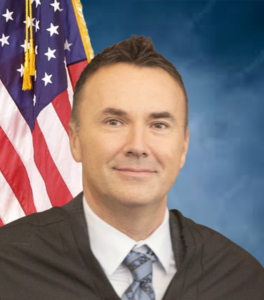
One of the most anticipated sessions of the conference will feature U.S. Magistrate Judge Jason Robertson of the Eastern District of Oklahoma. Judge Robertson will present a plenary program titled “Ethics of AI: Optional Technology. Mandatory Integrity.”
The session follows an order issued by Judge Robertson in October 2025 that quickly gained national attention for its thoughtful discussion of generative artificial intelligence and the responsibilities of lawyers using these tools. In the order, the court addressed a series of filings containing fabricated and inaccurate citations and used the opportunity to explain the continuing ethical duties that apply when attorneys rely on emerging technologies.
As Judge Robertson wrote in the order, “This ruling is not about technology. It is about trust.” The opinion emphasizes that while generative tools may assist lawyers in drafting, the duty to verify, review and stand behind every statement made in a filing remains firmly with the attorney.
Judge Robertson’s plenary session will further explore these themes and offer practical guidance on how lawyers can responsibly integrate AI into their practices while maintaining the professional standards that courts and clients expect. You can learn more about the judge’s order in my December 2025 Oklahoma Bar Journal article, “‘It Is About Trust’: What an Oklahoma Magistrate Judge’s Order Teaches Us About AI, Advocacy and Professional Courage.”
Herb Rubenstein, Thursday Morning Plenary Speaker
Another highly anticipated speaker will be Herb Rubenstein, attorney, author and PGA golf professional.
 During the opening plenary session on Thursday, Mr. Rubenstein will speak on lawyering in the here and now. He will also discuss mentoring in the legal profession during a second session during the conference.
Mr. Rubenstein’s sessions are sponsored by Phillips Murrah, an Oklahoma law firm dedicated to cultivating relationships and providing mentorship opportunities.
Practical Sessions for Today’s Law Practice
Beyond the plenary session, the conference will feature a wide range of breakout sessions designed to address everyday challenges in modern law practice.
Technology and innovation will be prominent themes. Lawyers who are beginning to explore artificial intelligence tools can attend “AI: Tools You Can Use for Beginners,” a practical introduction to emerging technologies and how they can assist lawyers in everyday work.
Cybersecurity will also be addressed in “Cybersecurity Concerns for Attorneys in the Age of Polymorphic AI,” which examines how evolving threats are reshaping digital risk for law firms and what attorneys should be doing now to protect client information.
Lawyers interested in improving the business side of their practice may want to attend “The Client Experience as a Competitive Edge,” presented by Kenton Brice, which focuses on how thoughtful client service strategies can strengthen a firm’s reputation and long-term growth.
Other sessions will address professional development and firm culture, including “Please Fix: The Art of Giving Feedback to Associates,” a program designed to help lawyers navigate one of the most challenging aspects of leadership in a law firm environment. Learning how to deliver clear, constructive feedback is a skill lawyers must develop as they transition from practitioner to mentor and manager.
The conference will also feature programming focused on substantive law updates and emerging legal issues. For example, “Update on Oklahoma Real Property Authority 2024-2025,” presented by Kraettli Q. Epperson, will provide insight into recent developments affecting real property practice in Oklahoma. Attorneys can also attend “Intellectual Property in Real Life: Lessons From the Field for Businesses (and Their Attorneys),” presented by Kate Sullivan, which will explore how intellectual property issues increasingly intersect with everyday business operations. As innovation, branding and digital assets become central to modern business strategy, understanding the practical realities of intellectual property law is becoming important for lawyers well beyond traditional IP practice areas.
Access to Justice and Professional Service
Service to the public remains a central value of the legal profession, and the Midyear Conference programming reflects that commitment. A session titled “How to Easily Incorporate Pro Bono Into Your Law Firm,” presented by Katie Dilks and Jim Calloway, will provide practical ideas for attorneys who want to integrate pro bono service into their practice in manageable and meaningful ways.
For lawyers interested in appellate work, a panel featuring Jana Knott, Justin Lollman and Sharon Thomas will provide insights into appeals and the issues appellate practitioners encounter in Oklahoma courts.
A Conference Built for Conversation
The Midyear Conference schedule intentionally balances educational sessions with opportunities for lawyers to connect with one another. Breakfasts, lunches and evening events provide time for informal conversations that often prove just as valuable as the formal programming.
Those conversations can lead to referrals, mentorship relationships and collaborative opportunities that extend long after the conference ends.
Looking Ahead
The legal profession is navigating a period of rapid change, particularly as technology reshapes how lawyers work and how clients interact with legal services. The Midyear Conference provides a rare opportunity to step away from the daily pace of practice and consider those changes in a thoughtful setting alongside colleagues.
Whether attorneys are interested in learning about artificial intelligence, improving client experience, strengthening firm culture or simply reconnecting with colleagues from across the state, the Midyear Conference offers programs designed to inform, challenge and inspire.
To learn more about the OBA Midyear Conference and to register, visit www.okbar.org/midyear.
FEATURED SPEAKERS
U.S. Magistrate Judge Jason Robertson
Judge Jason A. Robertson serves as a U.S. magistrate judge for the Eastern District of Oklahoma. An Oklahoma native and former trial attorney, he brings more than 25 years of criminal and civil trial experience to the federal bench.
Appointed in 2022, Judge Robertson also serves as an adjunct professor at the TU College of Law and frequently speaks on legal ethics, courtroom practice and the evolving role of technology in the legal profession.
Judge Robertson’s work reflects a career devoted to trial advocacy, constitutional discipline and the enduring responsibility of the American courtroom.
Herb Rubenstein, J.D., MPA, PGA
Herb Rubenstein is an attorney and the author of numerous books on the legal profession, leadership and business. He has taught courses on AI, negotiation, ethics, change management and leadership at several universities and online for organizations including Thomson Reuters, the OBA, the Virginia Law Foundation and others. He has been a consultant to law firms, nonprofit organizations, educational organizations, government agencies and companies.
He received his law degree from Georgetown University. He is an active member of the D.C., Maryland, Virginia and Supreme Court bars. Mr. Rubenstein became a professional golfer at the age of 65 and was elected to the PGA when he was 67. Sponsored by Phillips Murrah PC.
Ms. Bays is the OBA Management Assistance Program director. Need a quick answer to a tech problem or help solving a management dilemma? Contact her at 405-416-7031, 800-522-8060 or julieb@okbar.org. It’s a free member benefit.
Originally published in the Oklahoma Bar Journal — April, 2026 — Vol. 97, No. 4