
Oklahoma Bar Journal
Establishing and Disestablishing Paternity Under Oklahoma’s Uniform Parentage Act
By Ann Murray and Julie Bushyhead
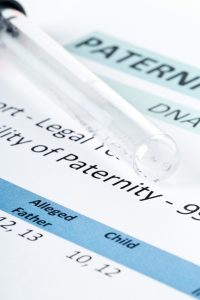
Whether you are counsel for the child, parents, guardians or Child Support Services, cases involving parentage disputes can present fact scenarios that take you on a winding maze and leave your head spinning. The goal of this article is to provide some clarity for navigating complex parentage fact scenarios in accordance with Oklahoma law. This article outlines the requirements of the Uniform Parentage Act (UPA), along with essential questions to ask when analyzing these cases.
The UPA was enacted in Oklahoma in 2006. It provides a framework for establishing the parentage of a minor child. According to the UPA, there are four types of fathers: alleged,[1] presumed,[2] acknowledged[3] and adjudicated.[4] A father-child relationship is created by an unrebutted presumption, an acknowledgment of paternity, adjudication, adoption or as otherwise provided by law.[5]
TYPES OF FATHERS
Alleged fathers are just that – someone alleged to be the father of a child. A presumed father is rebuttably presumed to be the father of a child by operation of law. There are four legal presumptions under the UPA.[6] A man is presumed to be the father of a child if the child is born during the marriage, within 300 days after the marriage ends,[7] prior to the marriage and the husband voluntarily asserts paternity in a record,[8] or if a man lives with a child for the first two years of the child’s life and holds the child out as his own.[9] A presumption of paternity may not be waived.[10] Acknowledged fathers occur when the mother and the biological father of the child sign an acknowledgment of paternity.[11] If the child’s mother is married to someone who is not the biological father of the child, the acknowledgment signed by the biological father is not valid until the husband signs a denial of parentage.[12] Both the denial and acknowledgment must be signed before the child reaches the age of two.[13] Finally, an adjudicated father is a father determined by a court order.
When a man is a legal father (presumed, acknowledged or adjudicated), he is not entitled to genetic testing unless successful in a challenge, and genetic testing is ordered by the court.[14] When a child already has a legal father, any results of genetic testing are inadmissible absent an order for genetic testing that complies with §7700-608.[15] A legal father may be entitled to genetic testing if he successfully challenges his legal paternity. In order to raise a challenge, a party with standing must file a timely and proper challenge in accordance with Article 6 of the UPA.[16] If the child already has a legal father, a court may not adjudicate another man’s parentage prior to a successful challenge of the underlying presumption, acknowledgment or adjudication.
PARTIES, JURISDICTION AND VENUE
The parties who can maintain a proceeding to adjudicate parentage are the child, the mother of the child, a man whose parentage is to be determined, Oklahoma Human Services or a representative authorized by law to act for an individual who would otherwise be entitled to maintain a proceeding but who is deceased, incapacitated or a minor.[17] The mother of the child and a man whose paternity of the child is to be adjudicated may be joined as parties in a proceeding to adjudicate parentage.[18] The court must have personal jurisdiction over the individual who will be adjudicated as the child’s legal parent.[19] Venue is proper in the county where the child resides or is found, where the respondent resides if the child does not reside in this state or where the probate of the alleged father’s estate has been commenced.[20]
STATUTE OF LIMITATIONS
In addition to personal jurisdiction and venue, the court’s ability to hear and adjudicate a paternity challenge is limited by the applicable statute of limitations. In an Article 3 challenge of an acknowledgment of paternity, the court may hear the challenge if it is filed within two years after the acknowledgment is executed and the court finds duress[21] or material mistake of fact[22] by clear and convincing evidence.[23] This challenge shall be conducted in the same manner as an Article 6 challenge.[24] In Article 6 challenges, the court may hear a challenge to a presumption of parentage if the child is under the age of two or if the child is over the age of two, and the court finds the presumed parent neither cohabited nor engaged in sexual intercourse with the mother at the probable time of conception and never held the child out as his own.[25]
The court may also hear an action seeking to disprove the father-child relationship between a child over two years of age and the child’s presumed or acknowledged father if the court finds that the biological father, presumed or acknowledged father and biological mother agree to adjudicate the biological father’s parentage in accordance with UPA §§608 and 636.[26] A final order under this section shall not leave the child without an adjudicated or acknowledged father.[27]
The court may hear a challenge to a legal presumption or an acknowledgment of paternity on the basis of fraud[28] as long as the challenge is filed before the child’s 18th birthday.[29] The court must find that fraud is proven by clear and convincing evidence. If the court finds that the challenger has failed to prove fraud by clear and convincing evidence, the court lacks the authority to hear the parentage challenge under this subsection. This section does not confer jurisdiction to hear a challenge made by an adjudicated father.
Finally, in the case of an adjudicated father, a challenge to the adjudication can be made only under the law of this state relating to appeal, vacation of judgments or other judicial review.[30] In a divorce proceeding, absent language showing a proper rebuttal, the court is deemed to have made an adjudication of parentage if the child is identified as being of the marriage or if the spouse is ordered to support the child.[31] If the adjudication is overturned, the father’s legal status shifts from being an adjudicated father to an acknowledged or presumed father, and the court may be able to hear the challenge pursuant to the Article 6 challenge procedures discussed above.
GUARDIAN AD LITEM
Once the court makes a finding that it can hear a challenge under §308 or §607 of the UPA, the next step is to determine if a guardian ad litem (GAL) is necessary. A GAL shall be appointed when the child is over two years of age unless proceeding under 10 O.S. §7700-607(B). A GAL may be appointed at the court’s discretion or the parties’ request.[32] Once a GAL is appointed, the parties should allow time for 1) the GAL to meet with the parties, including the child, and prepare a written report regarding the factors influencing whether genetic testing should occur,[33] 2) the parties to review the GAL report, 3) the matter to be set for hearing on best interest factors and estoppel[34] and 4) the court’s decision on whether genetic testing is appropriate.
GENETIC TESTING

To disprove the parentage of a child having a presumed, acknowledged or adjudicated father, court-ordered genetic testing is required after a successful challenge described above and a determination by the court that genetic testing is in the child’s best interests as described in detail below.[35] The results of genetic testing must identify the biological father or exclude the presumed/acknowledged father.[36] The only exception to this rule is the timely execution of a denial of paternity and acknowledgment of paternity to rebut a marital presumption within two years of the child’s birth.[37] Genetic testing is also required in a scenario where the legal father, biological father and mother agree to substitute the biological father for the legal father.[38] If the court finds the conduct of the mother or presumed father estops them from denying parentage or that genetic testing would be contrary to the child’s best interests, the court should deny a motion seeking an order for genetic testing[39] and enter an order denying the parentage challenge, which includes language that confirms and adjudicates the existing legal father.[40]
If the court finds that genetic testing would not be contrary to the child’s best interests based on the nine factors outlined in §608(B) and the conduct of the parties has not estopped either party from now denying parentage, the court may enter an order for genetic testing. An order for genetic testing does not rebut a presumption or vacate an acknowledgment. The legal parent’s status is not disestablished until after genetic testing is performed, the results show the legal parent is not the biological father, and the court enters an order for disestablishment.
FINAL ORDER
After the court receives the results of the genetic testing, a final order must be entered consistent with the results of the genetic testing.[41] Final orders regarding parentage must contain the statutorily required language.[42] Orders should state with specificity that the Office of Vital Records must add or remove a father from a birth certificate. In three challenges,[43] if the genetic test results confirm that the legal parent is not the biological parent, the court enters an order of nonparentage that rebuts the parent-child relationship. Leaving a child without a father is only prohibited in proceedings under 10 O.S. §607(C).
If the genetic test results show that the legal parent is the biological father, then the court should enter an order confirming parentage. Under §607(C), if the genetic test results show that the alleged father is the biological father, the court should enter an order of parentage and child support, which rebuts the marital presumption and adjudicates the biological father to be the legal father.[44] However, if the genetic test results show the alleged father is not the biological father, the court would have to enter an order that confirms the legal father-child relationship that exists by operation of law with the husband. If the court had tested the husband first and then tested the alleged father and found that neither man was the biological father, the court would have to wrestle with two conflicting instructions in the UPA.[45] When this happens in a proceeding under §607(C), the court may not dismiss the proceeding.[46]
APPLICATION IN REAL LIFE
Just the Facts
Now that you understand the framework and the order of operations for parentage challenge procedures, how does this information guide your actions early in a case when a client desires a particular parentage outcome, and the child already has a legal father? The first step, as in any case, is to get the facts. When we start solving problems with missing facts, we risk solving the wrong problem, and our pathway to success will likely include some frustrations, inefficiencies and barriers along the way. A case is rarely as straightforward as it appears. Your client may tell you that John Smith is the biological father without a shadow of a doubt, but because of ignorance of the law, shame, fear, trauma or all the other human reasons that might exist, your client omits the really important bits of information that make all the difference in the case. Knowing and asking the essential questions, followed by making a timeline of the relevant parentage facts, is the best way to uncover these important facts and organize fact patterns that are often messy and overlapping. Over the next few paragraphs, we will explore the essential questions.
If you are representing a party in a divorce or paternity action involving minor children, it is important to ask if Child Support Services (CSS) has an open case involving the children in the case.[47] If there is an open case, CSS will be a necessary party and can be a resource for you to help fill in the factual gaps and navigate parentage issues.[48] Sometimes, it’s giving a call to CSS out of the gate that helps you realize an administrative or district court order already exists for this family when those results have not populated from your district court case search. Also, it’s helpful to obtain a copy of each child’s birth certificate.[49] The existence of a father’s name on a child’s birth certificate can be a clue that the child may already have a legal father. In Oklahoma, the presence of a father’s name on the birth certificate indicates one of three things: He and the mother were married at the time of the child’s birth, the mother and father executed an acknowledgment of paternity, or the issue of paternity has been adjudicated and the addition of the father’s name on the birth certificate was ordered by a court.[50]
Next, identify any children ever born to the mother in your case,[51] when those children were born and the dates of the mother’s current and prior marriages and divorces. Identify if any acknowledgments of paternity pertaining to this child exist and when the document was executed.[52] Identify if a denial of paternity was executed and when, if appropriate. Determine where and with whom the child has lived for the first two years of the child’s life. The answers to these questions are the first few points on your timeline and help to determine all legal parents that may exist for the child(ren) in this case. You may find that a child has competing legal fathers because multiple presumptions apply, or you may find that the man listed on the birth certificate is an “incomplete” legal father because his acknowledgment is invalid in the absence of a denial of paternity or rebuttal of the marital presumption.[53]
Identify the Father(s)
Now that you have the essential events plotted on your timeline, it’s time to think about what legal father-child relationships exist for each child in your case based on the legal statuses defined above. Identify which man the child knows to be their father, whether any man has been holding the child out as his own, other actions the parties have taken in identifying one father over the other, the extent to which a father-child relationship and bond exist between the child and any legal or alleged fathers and the other factors outlined in 10 O.S. §7700-608(B). These facts will show whether the court is likely to grant a request for genetic testing to challenge a legal father-child relationship, whether a GAL might be important given the facts in this case and which man should be determined to be the child’s father, considering the best interests of the child and the actions of the parties.
In this moment of uncertainty about the biological father of the child, you may be tempted to suggest that the parties take an out-of-court genetic test. This is a risky move because the results will be inadmissible in a challenge proceeding,[54] and the results may cause harm to the child’s best interests. If the facts in the case reveal that the parties do not have a challenge claim that can be heard by the court or the best interest of the child would cause the court to deny the request for genetic testing, the court could determine that the legal father should be confirmed as the child’s father despite the out-of-court genetic test results.[55] The knowledge that the legal father is not the child’s biological father may contribute to a reduction in support, connection and belonging for the child. Resist this urge to conduct out-of-court genetic testing and come back to your timeline of facts to make a plan that follows the path outlined by the UPA.
Identify the Parties and Their Goals
Next, identify the parties, their goals and the steps for achieving these goals. CSS’s goals will be similar to the court’s goals: follow the challenge procedures of the UPA so the issue of parentage is settled and not the subject of future litigation, ensure that all legal parents and interested parties receive notice and an opportunity to be heard and protect the child’s best interests. Think about venue and where the parentage issues should be adjudicated – district court or administrative court. Consider in which district court case the parentage issues should be raised: in a prior divorce proceeding omitting a child of the marriage, in a new paternity action involving the alleged biological father or in a new action joining the mother, biological father and legal father (which might be appropriate in the absence of a prior divorce or paternity action). Think about which parties should be joined to the action, who is entitled to notice and who should be genetically tested.
Multiple Fathers
If you are handling a case where multiple legal fathers exist for one child, you may want to consider which claim should be addressed first and which claim has priority or should be rebutted before other claims are confirmed. This is where the timeline you plotted earlier will come in handy. Think about the moment when the presumption or acknowledgment attaches to the child by operation of law. For example, a marital presumption attaches to the child at the moment of the child’s birth when the child is born during a marriage. Whereas the two-year presumption attaches to the child at the moment both elements are satisfied: on the child’s second birthday, when the child has lived with the man for the first two years of the child’s life, and that man has held the child out as his own. In a case involving these competing legal fathers, the following questions arise:
- Should the parentage claims be adjudicated separately in their own cases or in one case where all parties are joined?
- Which exception to the statute of limitations allows the court to hear this challenge?
- Which man has a relationship with the child?
- Which relationship should the court consider when applying the best interest factors of §608?
- Which man should be tested or is eligible for genetic testing, and whose legal father-child relationship should be confirmed and rebutted?
Marital Presumption and Acknowledgment of Paternity
What about a case where a marital presumption exists, but the mother and another man signed an acknowledgment of paternity at the time of the child’s birth, falsely denying that the mother was married? Who are the legal fathers? The husband is a presumed father. Is the man who signed the acknowledgment a legal father? It depends.
If the husband also signed a denial of paternity before the child’s second birthday, the acknowledged father is the legal father because the marital presumption has been successfully rebutted by the execution of these two forms prior to the child’s second birthday.[56] If the husband has not signed a denial prior to the child’s second birthday, the acknowledgment is invalid.[57] The acknowledged father is likely on the birth certificate and believes there is no question as to his paternity. However, he is not a legal father yet.
Bates v. Copeland explains that the legal father-child relationship that exists by operation of law with the husband and child cannot be divested by the actions of the mother and another man without notice to the legal father and his opportunity to be heard.[58] A court cannot adjudicate another man to be the father until the underlying marital presumption is rebutted. Assuming the facts support this exception to the statute of limitations, you could take the approach of rebutting the marital presumption in a separate action under 10 O.S. §7700-607(B), asking the court to make a finding that the husband neither cohabitated nor engaged in sexual intercourse with the mother at the probable time of conception and has not held the child out as his own. If the court finds that the actions of the parties do not estop them from denying the husband’s parentage and negative genetic test results would not harm the best interests of the child, the court could order genetic testing and enter an order rebutting the marital presumption consistent with the results of genetic testing.
What’s left? Bates would suggest that the impediment to the validity of the acknowledgment of paternity has been resolved. Arguably, the acknowledgment of paternity springs to life because the presumption causing it to be invalid no longer exists.
Who To Genetic Test
Alternatively, could you have joined the parties into one action and asked the court to test the man who signed the acknowledgment instead of testing the husband to rebut the husband’s presumption? Theoretically, yes, because the man who signed the acknowledgment was not technically a legal father yet, and §631 allows a presumption to be disproved by genetic test results identifying another man as the father. However, determining which man to test should be the result of careful and thoughtful consideration. What if the acknowledged father had a relationship with the child? Genetic testing of him, as a method of disproving the husband’s parentage under 10 O.S. §7700-631, could have been detrimental to the child’s best interest if he had an established relationship and bond with the child, and the results showed he was not the biological father.
Getting the facts and the timeline early in the case is essential. Think about how the approach and results might have changed if our timeline was missing this essential fact in the scenario above: The man who signed the invalid acknowledgment also lived with the child for the first two years of the child’s life and held the child out as his own. Who are the legal fathers? The husband is the marital presumed father; the man who signed the acknowledgment is also a presumed father.[59] Which man should be genetically tested is answered by who could pass the §608 best interest factors. In that scenario, the man with no relationship to the child should be tested first because the risk of harm to the child is lower. If the husband was determined not to be the father by genetic testing after a successful challenge under 10 O.S. §7700-607(B), who is left?
The man who lived with the child for the first two years of the child’s life and held the child out is the presumed father, and his acknowledgment arguably springs to life. The court could simply confirm the legal father-child relationship created by the presumption and the acknowledgment. If you hadn’t asked the question about whether any man had lived with the child for the first two years of the child’s life and held the child out as his own, you would have missed the fact that the child had two legal fathers and that the two-year presumed father would likely not be eligible for genetic testing. Missing this fact could have led to improper genetic testing of the two-year presumed father and harm to the child’s best interests.
CONCLUSION
The great number of unique fact patterns, along with the complexities that don’t always fit neatly into the parameters of the UPA, make this topic challenging. With a case load of over 150,000 cases statewide, CSS has seen its fair share of the most unusual parentage cases. We hope our experience has helped illuminate the path and the way forward.
Authors’ Note: This article was drafted with contributions from Mark Gutel, state attorney at the Midwest City office, and Ben Jury, state attorney at the south Oklahoma City office.
ABOUT THE AUTHORS
 Ann Murray is the managing attorney of the Office of Impact Advocacy and Legal Outreach at Oklahoma Human Services Child Support Services.
 Julie Bushyhead is the programs manager for attorney and management development at Oklahoma Human Services Child Support Services.
ENDNOTES
[1] 10 O.S. §7700-102(3).
[2] 10 O.S. §7700-102(16).
[3] 10 O.S. §7700-102(1).
[4] 10 O.S. §7700-102(2).
[5] 10 O.S. §7700-201(B).
[6] 10 O.S. §7700-204.
[7] 10 O.S. §7700-204(A)(2), but this presumption has been the law in Oklahoma since enactment by the first legislative assembly. 1890 Oklahoma Statutes Chapter 63, Article 1 §2 (pg. 746). See, e.g., In re Davis’ Estate, 1934 OK 491, 36 P.2d 471, 169 Okla.133.
[8] 10 O.S. §7700-204(A)(4).
[9] 10 O.S. §7700-204(A)(5).
[10] Clark v. Eden, 2011 OK 28, ¶11-12, 254 P.3d 672, 676.
[11] 10 O.S. §7700-301.
[12] 10 O.S. §7700-303.
[13] Id.
[14] 10 O.S. §7700-502(B).
[15] 10 O.S. §7700-621(C).
[16] 10 O.S. §7700-204(B) and 10 O.S. §7700-308(D) referring to 10 O.S. §7700-601 et seq.
[17] 10 O.S. §7700-602.
[18] 10 O.S. §7700-603.
[19] 10 O.S. §7700-604.
[20] 10 O.S. §7700-605.
[21] 10 O.S. §7700-102(6).
[22] 10 O.S. §7700-102(12).
[23] 10 O.S. §7700-308.
[24] 10 O.S. §7700-309(D).
[25] 10 O.S. §7700-607(A) and (B).
[26] 10 O.S. §7700-607(C).
[27] Id.
[28] 10 O.S. §7700-102(9).
[29] 10 O.S. §§7700-607(D) and 308(A)(2).
[30] 10 O.S. §7700-637(E), 12 O.S. §1031 et seq.
[31] 10 O.S. §7700-637(C).
[32] 10 O.S. §7700-608(C).
[33] 10 O.S. §7700-608(B).
[34] 10 O.S. §7700-608.
[35] 10 O.S. §§7700-621 and 631.
[36] 10 O.S. §§7700-631.
[37] 10 O.S. §§7700-303-305, 631 and 621.
[38] 10 O.S. §7700-607(C).
[39] 10 O.S. §7700-608(A).
[40] 10 O.S. §7700-608(D). See also In re A.S., 2020 OK CIV APP 23, 466 P.3d 619.
[41] 10 O.S. §7700-631.
[42] 10 O.S. §7700-636.
[43] 10 O.S. §7700-607(A), (B) and (D).
[44] 10 O.S. §7700-631.
[45] In the case where the results of genetic testing are negative as to legal and alleged father in an action under 10 O.S. §7700-607(C), there are two conflicting rules under the UPA: 10 O.S. §7700-607(C) states, “A final order under this subsection shall not leave a child without a ... father,” and 10 O.S. §7700-631(4) states, “A man excluded as the father of a child by genetic testing shall be adjudicated not to be the father of the child.”
[46] 10 O.S. §7700-631(3).
[47] 43 O.S. §112(F).
[48] Even if there is not an open case, CSS desires to be of service to the private bar and court when it comes to navigating child support and parentage law.
[49] Your client will have to provide this. A birth certificate can be ordered through the Department of Health Office of Vital Records at https://bit.ly/3KopBmD.
[50] 63 O.S. §1-311(D).
[51] Why would you need this information? Whether the pending action is a divorce or paternity, this question may reveal children the client hasn’t mentioned. It’s possible that various presumptions may exist for these children that make them the subject of the pending action.
[52] The parents who signed the form may call the Department of Health Office of Vital Records at 405-271-4040 or email ASKVR@health.ok.gov. Alternatively, the parents or their attorneys may mail, fax or email a request to the CSS Paternity Acknowledgment Section. P.O. Box 248843, Oklahoma City, OK 73124, Fax: 405-325-7141, Attention: CSS Paternity Acknowledgment Section, OCSS.AOP.Requests@okdhs.org.
[53] Bates v. Copeland, 2015 OK CIV APP 30, 347 P.3d 318.
[54] 10 O.S. §7700-621.
[55] In re A.S., 2020 OK CIV APP 23, 466 P.3d 619.
[56] 10 O.S. §7700-304.
[57] Bates, 2015 OK CIV APP at ¶9, 347 P.3d at 320. Bates specifically uses the language of “invalid.” This language aligns with 10 O.S. 7700-304(A), where it states, “If the acknowledgment and denial are both necessary, neither is valid until both are executed.”
[58]Bates, 2015 OK CIV APP at ¶16, 347 P.3d at 324-325.
[59] 10 O.S. §7700-204(A)(5).
Originally published in the Oklahoma Bar Journal – OBJ 97 No. 1 (January 2026)
Statements or opinions expressed in the Oklahoma Bar Journal are those of the authors and do not necessarily reflect those of the Oklahoma Bar Association, its officers, Board of Governors, Board of Editors or staff.