
Oklahoma Bar Journal
The Back Page | Oklahoma District Courts Partner With OU To Launch Juror Support Program
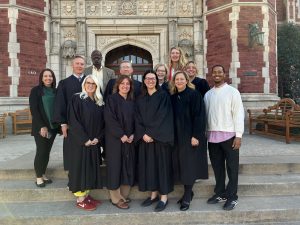
The Oklahoma District Courts announce a recently launched Juror Counseling Initiative in conjunction with OU. Front row, from left: Judge Lori Puckett, McClain County District Court; Judge Leah Edwards, McClain/Garvin County District Court; Judge Mindy Beare, Pittsburg County District Court; Judge Sheila Stinson, Oklahoma County District Court; Damon Cravens, OU Human Relations/Psychology academic advisor. Middle row, from left: Dr. Katie Allen, OU Department of Human Relations assistant professer and clinical mental health counseling program coordinator (Norman); Judge Thad Balkman, Cleveland County District Court; Judge Stuart Tate, Osage County District Court; Judge Donna Dirickson, Custer/ Beckham County District Court; Judge Kathryn Savage, Oklahoma County District Court. Back row, from left: Dr. Wesley Long, OU Human Relations department chair; Elizabeth R. Nelson, LPC-S, OU Department of Psychology instructor.
In a groundbreaking effort to support citizens who serve on juries in difficult criminal cases, the Oklahoma Judges Association has partnered with OU to launch a juror counseling and support initiative designed to assist individuals who experience emotional or psychological distress following jury service.
The program, which began in March in Cleveland County and is expected to expand to Oklahoma County in the near future, will provide access to trauma-informed counseling services for jurors who have served in cases involving violent crime, sexual abuse and other traumatic subject matter. Through this collaboration, qualified mental health professionals and supervised OU students will offer resources and support to jurors who may struggle with the lingering impact of exposure to graphic testimony, images, video evidence and disturbing facts presented during trial.
Judges across Oklahoma have increasingly recognized that while jury service is a cornerstone of the justice system, the emotional toll it can take on citizens asked to evaluate tragic and violent evidence has historically gone largely unrecognized. Jurors are asked to see images, watch videos, examine physical evidence and hear testimony describing some of the most heinous acts imaginable. Oklahoma trial judges note that courts have become increasingly aware that some jurors leave the courthouse carrying the emotional weight of the experiences they encountered during trial.
“Many jurors complete their service having fulfilled an essential civic responsibility, but also carrying images and experiences they did not anticipate,” said District Judge Leah Edwards. “Their service is vital to the justice system, and it is important that after they have completed that duty, they have access to resources that help them process those experiences and restore their confidence in the good that comes from justice being served.”
OU has joined the effort, recognizing both the importance of the issue and the opportunity to provide meaningful public service while offering real-world learning experiences for students in counseling, psychology and related disciplines under professional supervision.
Through the partnership, the university will work with the district courts to develop trauma-informed pro bono services designed specifically for jurors who may experience lingering emotional effects after participating in difficult trials, representing a thoughtful and proactive approach to addressing an issue courts across the country are beginning to recognize.
Judicial leaders believe the collaboration could become a model program nationwide, demonstrating how courts and academic institutions can work together to support the citizens who make the jury system possible.
“Our jurors give their time, their attention and their judgment in service of justice,” Judge Edwards added. “This program reflects a simple but powerful idea: when our citizens step forward to serve the justice system, the justice system should also be ready to care for them.”
The program is expected to begin serving jurors in Cleveland County immediately, with plans to expand services to Oklahoma County as the program develops. If successful, the initiative may serve as a blueprint for a broader statewide effort to ensure jurors across Oklahoma have access to support when needed.
Originally published in the Oklahoma Bar Journal – OBJ 97 No. 4 (April 2026)
Statements or opinions expressed in the Oklahoma Bar Journal are those of the authors and do not necessarily reflect those of the Oklahoma Bar Association, its officers, Board of Governors, Board of Editors or staff.